
Field Guide
THE RESIDENTS
Filter by zone. Every animal below is real, recorded, and stranger than it has any right to be.
Filter by zone. Every animal below is real, recorded, and stranger than it has any right to be.
Showing 12 of 12 creatures
Design unchanged for 110 million years. Females cross whole oceans to nest on the exact beach where they were born.
AncientMigrant
The most abundant vertebrate on Earth. Billions rise toward the surface every night — the largest migration on the planet, and it is vertical.
BioluminescentDaily migrant
Sees through its own head. A transparent dome protects two green, barrel-shaped eyes that look straight up for the silhouettes of prey.
Transparent headUpward eyesA living fishing rod: a glowing lure dangles in front of needle teeth. The male is a tenth her size — he bites on and never lets go.
Bioluminescent lureAmbush predator
Teeth too long to close its mouth. It flashes rows of photophores along its belly to erase its own shadow from predators below.
Needle teethCounter-illumination
A tail with a mouth attached. Its jaws open to a quarter of its body length, letting it swallow prey larger than itself whole.
Huge jawsDeep scavenger
Stands on the seafloor on three stilt-like fins, facing into the current, waiting motionless for food to drift into its mouth.
Stilt finsPatient hunter
A pill bug the size of a house cat — up to 50 cm long. It can go years without eating, then gorge on a fallen whale until it can barely move.
Giant isopodFasting champion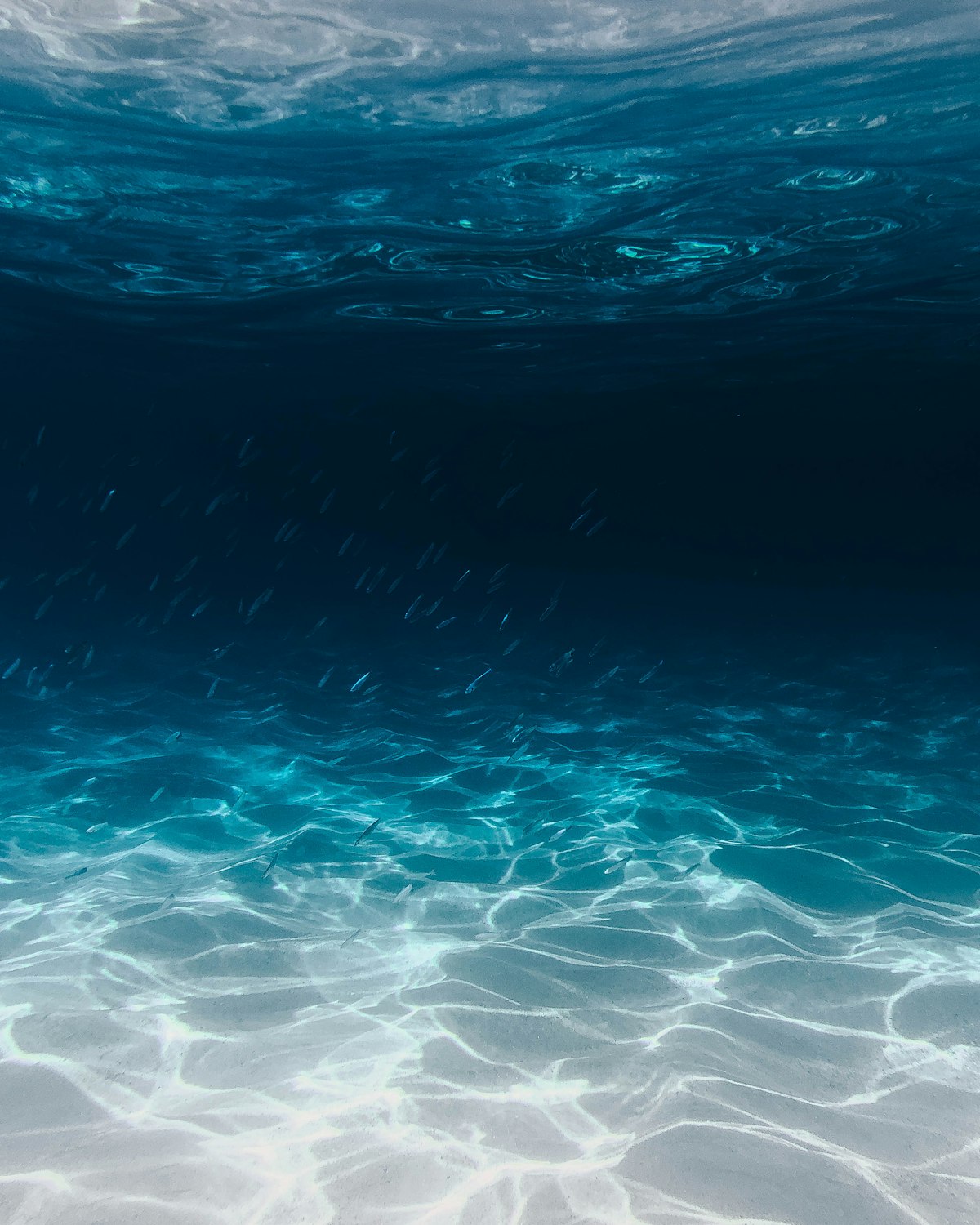
The deepest fish ever filmed — 8,336 m in the Izu-Ogasawara Trench, 2023. Pale and translucent, built for pressure that would crush a submarine.
Deepest fish8,336 m
Discovered in 2005. Its hairy arms farm bacteria, which it combs off and eats — a crab that grows its own food on its sleeves.
Vent dwellerBacteria farmer
Neither vampire nor squid — a living fossil, the last of its order. When threatened it turns itself inside out, wrapping in a cloak of spines.
Living fossilCloak defence
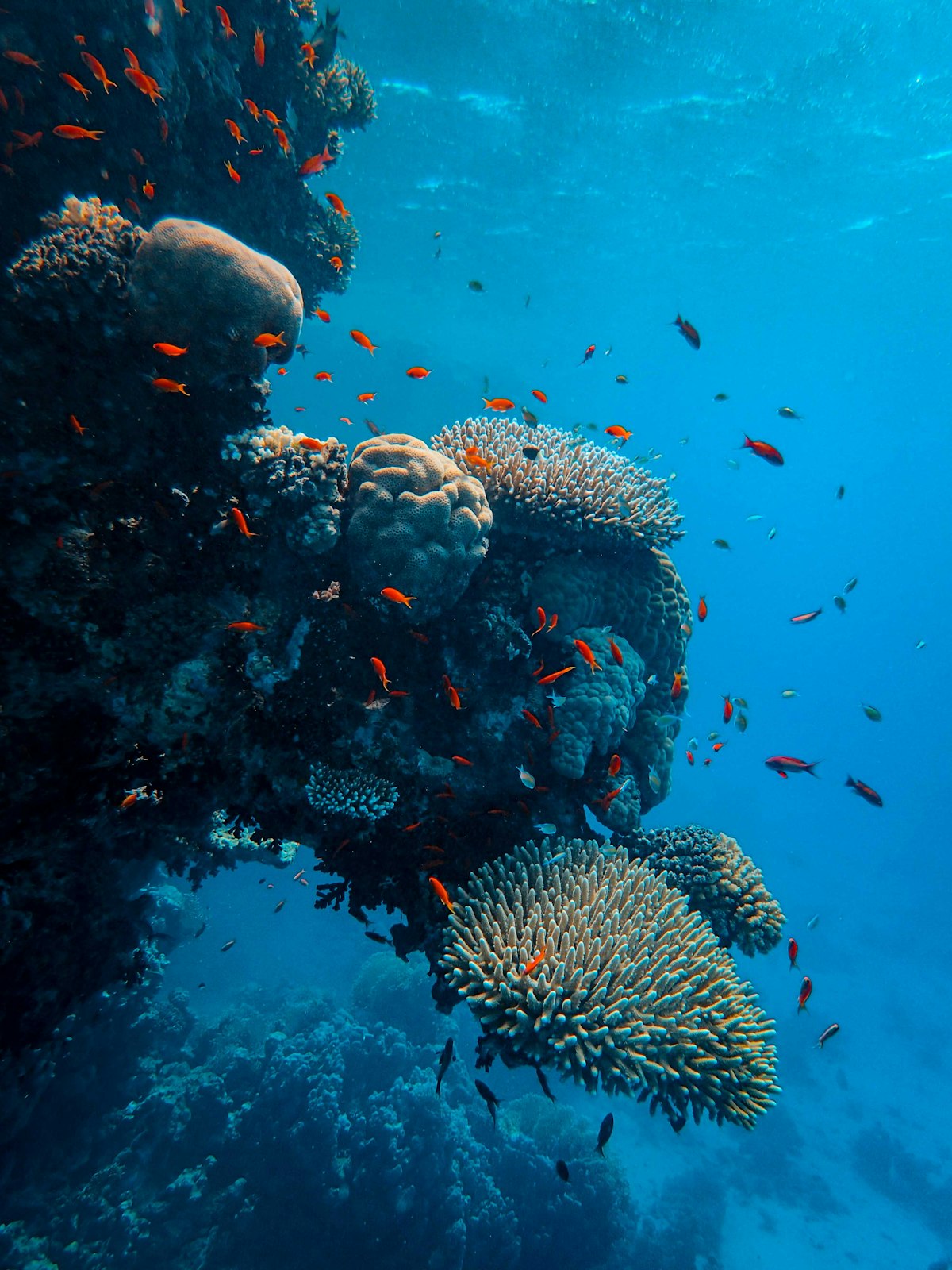
Reefs cover less than 1% of the ocean floor but hold about a quarter of all marine species. The most crowded neighbourhoods on Earth.
Biodiversity hotspotShallow reefPhotos are representative ocean imagery; species facts follow published records (NOAA, MBARI, JAMSTEC, Natural History Museum).